
Performance Marketing vs Growth Marketing: Understanding the Difference
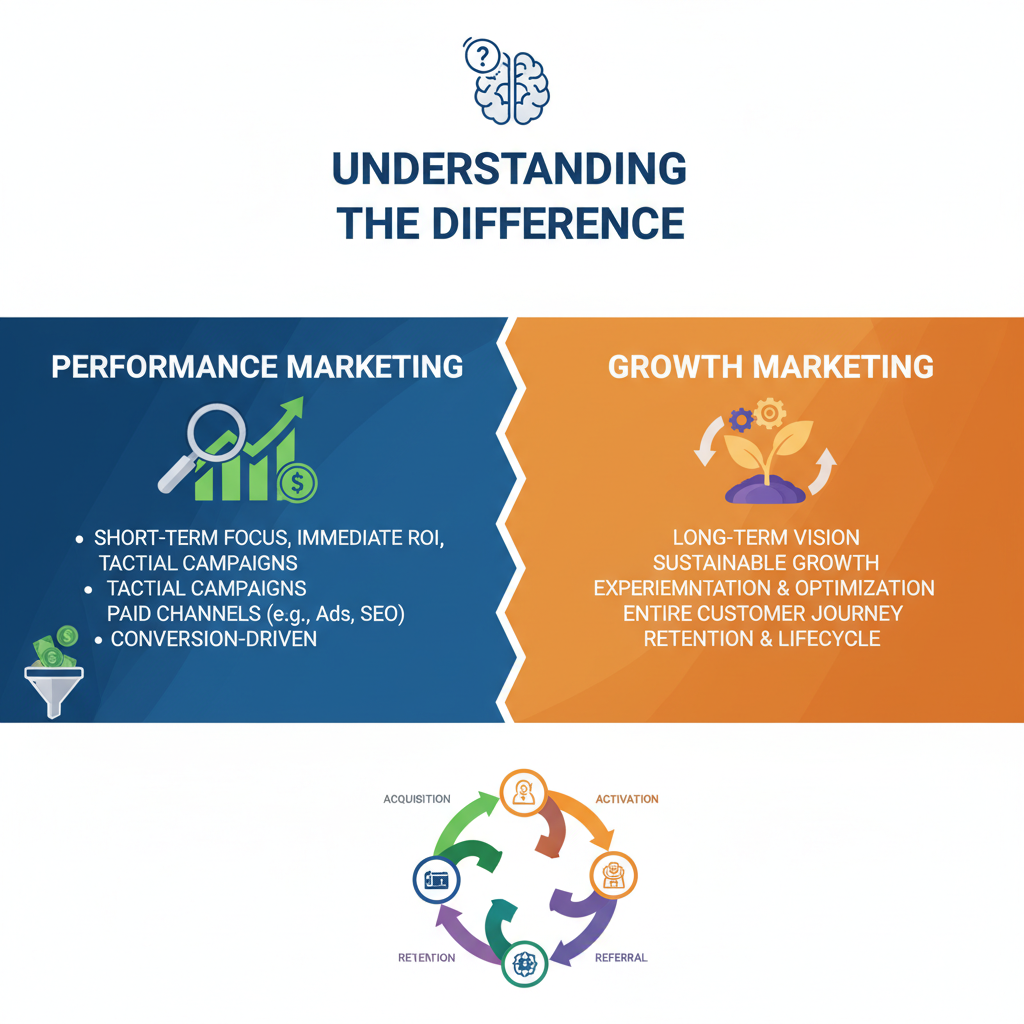
In the fast-evolving world of digital marketing, terms like performance marketing and growth marketing are often used interchangeably. While they share a common goal—driving business results—they are fundamentally different in approach, scope, and mindset. Understanding these differences can help businesses strategize more effectively and achieve sustainable growth.
What is Performance Marketing?
Performance marketing is a results-driven approach where marketers are paid based on measurable outcomes. It focuses on short-term, tangible metrics such as clicks, leads, sales, or conversions. The core principle is accountability: every dollar spent must produce a clear and trackable return.
Key Features of Performance Marketing:
ROI-focused: Success is measured by the return on investment.
Pay-for-performance: Advertisers pay only when a specific action is completed.
Short-term goals: Campaigns aim to drive immediate results like purchases or sign-ups.
Highly measurable: Uses tools like Google Analytics, Facebook Ads Manager, or affiliate networks.
Examples of Performance Marketing:
Affiliate Marketing: Paying partners a commission for every sale they generate.
Pay-Per-Click (PPC) Advertising: Google Ads campaigns where you pay for each click on your ad.
Email Marketing Campaigns: Sending targeted emails with tracking links to measure conversions.
In short: Performance marketing is about “spending money to get measurable results.”
What is Growth Marketing?
Growth marketing, on the other hand, is a broader, strategic approach focused on long-term business growth. It blends creativity, analytics, and experimentation across the entire customer lifecycle, not just acquisition. Growth marketers aim to optimize every touchpoint—from awareness to retention—to maximize growth sustainably.
Key Features of Growth Marketing:
Holistic approach: Focuses on the entire customer journey, not just conversions.
Data-driven experimentation: Uses A/B testing, funnels, and customer behavior analysis.
Long-term strategy: Aims for sustainable growth through retention, engagement, and upsells.
Cross-functional: Involves marketing, product, and customer success teams to drive growth.
Examples of Growth Marketing:
Onboarding Optimization: Improving the first experience of a user in an app to reduce churn.
Referral Programs: Encouraging users to invite friends for rewards, boosting organic growth.
Content Marketing & SEO: Building evergreen content to attract, educate, and retain customers.
In short: Growth marketing is about “experimenting and optimizing to achieve long-term growth.”
Performance Marketing vs Growth Marketing: Key Differences
| Aspect | Performance Marketing | Growth Marketing |
|---|---|---|
| Focus | Immediate measurable results | Long-term sustainable growth |
| Approach | Paid campaigns, ROI-driven | Holistic, across entire customer journey |
| Metrics | Conversions, clicks, leads, sales | Retention, engagement, LTV (lifetime value) |
| Timeframe | Short-term | Long-term |
| Scope | Marketing campaigns only | Cross-functional: marketing, product, sales |
| Experimentation | Limited, mostly A/B testing ads | Continuous experimentation across channels and funnels |
While performance marketing and growth marketing share a common goal—driving business success—they cater to different needs. Performance marketing is tactical, focusing on immediate results and ROI, while growth marketing is strategic, aiming for long-term customer engagement and retention.
The best businesses often combine both: using performance marketing to drive immediate results and growth marketing to ensure sustainable, scalable growth.