
What is E-E-A-T in SEO? A Complete Guide to Experience, Expertise, Authoritativeness, and Trustworthiness
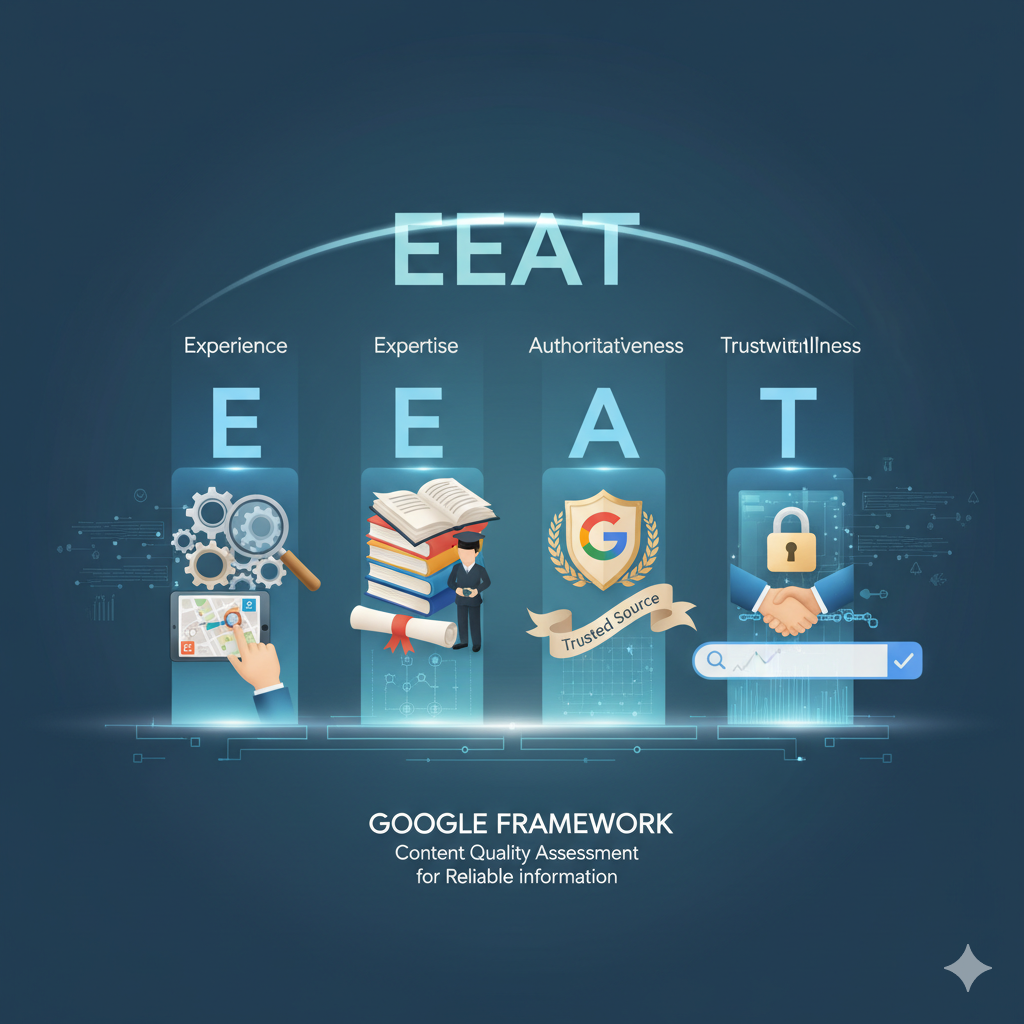
If you’ve been learning about SEO lately, you’ve probably come across the term E-E-A-T. It stands for Experience, Expertise, Authoritativeness, and Trustworthiness—a framework Google uses to evaluate the quality of online content.
While E-E-A-T is not a direct ranking factor, it plays a huge role in how Google determines whether your website deserves to rank high in search results. In other words, it’s a way to show Google (and your readers) that your content is credible, reliable, and valuable.
Let’s break down what E-E-A-T means and how you can apply it to your website.
What Does E-E-A-T Mean?
1. Experience
Google now considers the first-hand experience of the author. For example, a product review written by someone who has actually used the product will be valued more than a generic, second-hand review.
Example: A travel blog with photos and personal tips from the writer’s own trip will show stronger experience than a list compiled from other websites.
2. Expertise
This refers to the knowledge and skill of the content creator. Google prefers content written by people who know what they’re talking about.
Example: A medical article written by a licensed doctor carries more weight than one written by someone with no medical background.
3. Authoritativeness
This looks at the reputation of the website and the author. Are you (or your site) recognized as a trusted source in your niche? Do others cite or link to your content?
Example: A finance blog that is frequently referenced by other financial websites shows strong authority.
4. Trustworthiness
Trust is at the heart of E-E-A-T. Your content, website, and brand need to be transparent, accurate, and safe for users.
Example: Having clear contact information, secure HTTPS, fact-checked content, and transparent sourcing builds trust.
How to Implement E-E-A-T on Your Website
Now that you know what E-E-A-T means, here’s how you can apply it to your own site or content:
✅ Show Experience
Use real photos, videos, or case studies from your personal experience.
Share first-hand insights, reviews, or results instead of rewriting generic information.
✅ Demonstrate Expertise
Have subject matter experts write or review your content.
Add author bios with credentials, experience, and qualifications.
Keep your content accurate and up to date.
✅ Build Authoritativeness
Earn backlinks from reputable sites in your industry.
Get mentioned or cited by trusted publications.
Publish in-depth, well-researched content that others naturally reference.
✅ Establish Trustworthiness
Use HTTPS (secure site).
Provide clear contact details, about pages, and editorial policies.
Cite reliable sources and fact-check your claims.
Avoid clickbait and misleading information.
Why E-E-A-T Matters for SEO
Even though E-E-A-T is not a direct ranking factor, it heavily influences how Google evaluates the value of your site. Websites that lack E-E-A-T—especially in sensitive areas like health, finance, and safety (called YMYL: “Your Money or Your Life” topics)—risk losing visibility.
Strong E-E-A-T improves:
Search visibility (higher trust = better rankings over time)
User engagement (readers trust and return to your site)
Brand reputation (you become a go-to authority in your niche)