
How SEO Works: A Simple Guide for Beginners
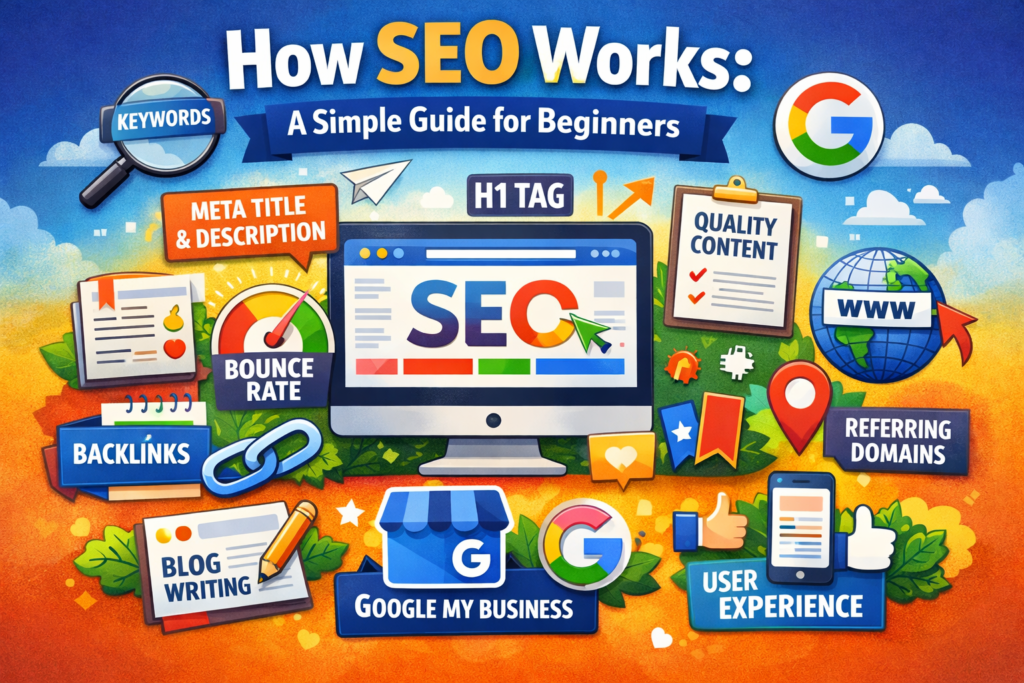
If you have a website, blog, or online business, you’ve probably heard about SEO. But how does SEO actually work? Many people think SEO is just adding keywords to a page, but it’s much more than that. It’s a combination of smart strategies that help search engines like Google understand your website and show it to the right people.
In this blog, we’ll look at the main elements that make SEO work ….in a simple, practical way.
1. Keyword Research – The Foundation of SEO
Everything in SEO starts with keyword research.
Keywords are the words or phrases people type into search engines. For example:
“best digital marketing tips”
“how SEO works”
“SEO for beginners”
When you do proper keyword research, you discover what your audience is searching for. Then you create content around those topics.
Good keyword research helps you:
Understand user intent
Find low competition keywords
Create relevant content
Tools like Google Keyword Planner, Ubersuggest, or Ahrefs can help you find the right keywords.
2. On-Page Optimization – Making Your Page SEO Friendly
Once you choose your keywords, the next step is on-page optimization. This means optimizing elements within your webpage so search engines understand your content.
Important on-page elements include:
H1 Tag
The H1 tag is the main heading of your page. It tells search engines what the page is about.
Example:
H1: How SEO Works for Beginners
There should normally be one H1 tag per page.
Keyword Density
Keyword density refers to how often your keyword appears in the content.
Best practice:
Use keywords naturally
Avoid keyword stuffing
Usually 1–2% density is enough
Example:
If your keyword is SEO strategy, use it naturally throughout the article.
Content Structure
Good SEO content includes:
H1, H2, H3 headings
Short paragraphs
Bullet points
Clear explanations
This improves both readability and ranking.
3. Meta Title and Meta Description
Two important SEO elements that appear in search results are:
Meta Title
The meta title is the clickable title in search results.
Example:
How SEO Works: Complete Beginner Guide
A good meta title should:
Include the main keyword
Be under 60 characters
Be attractive enough to encourage clicks
Meta Description
The meta description is the short summary below the title.
Example:
Learn how SEO works with simple strategies like keyword research, backlinks, and on-page optimization.
Good meta descriptions:
Are about 150–160 characters
Include keywords
Encourage users to click
4. Blog Writing on Your Own Website
One of the best ways to improve SEO is regular blog writing.
Search engines love fresh content. When you publish blogs on your website consistently, it helps:
Increase indexed pages
Target more keywords
Build topical authority
For example, if your website is about digital marketing, you can write blogs like:
SEO tips for beginners
Local SEO strategies
Content marketing guide
Over time, this helps your site rank for multiple keywords.
5. Backlinking – Building Website Authority
Backlinks are links from other websites pointing to your site.
Search engines consider backlinks as votes of trust. The more high-quality backlinks you have, the more credible your website appears.
Common backlink methods include:
Guest posting
Blog commenting
Directory submission
Social bookmarking
However, quality matters more than quantity.
A few strong backlinks from authoritative websites are better than hundreds of low-quality ones.
6. Directory Submission and Social Bookmarks
Directory Submission
Directory submission means submitting your website to online directories.
Examples include:
business directories
niche directories
local listings
This helps search engines discover your site and build backlinks.
Social Bookmarking
Social bookmarking sites allow users to share and save webpages.
When your content is shared on these platforms, it can:
Increase traffic
Improve visibility
Help indexing
7. Referring Domains
A referring domain is the number of unique websites linking to your site.
For example:
10 backlinks from 1 website = 1 referring domain
10 backlinks from 10 websites = 10 referring domains
Search engines usually value more referring domains because it shows broader trust across the web.
8. Bounce Rate and User Experience
Bounce rate is the percentage of visitors who leave your website without interacting with it.
A high bounce rate may indicate:
Poor content
Slow website speed
Bad user experience
To reduce bounce rate:
Write engaging content
Use images and headings
Improve page loading speed
Make your site mobile friendly
Better user experience often leads to better SEO performance.
9. Website Design, Colours and Readability
SEO is not only technical. Design and readability also matter.
Things that help users stay longer on your site include:
Clean layout
Comfortable colour combinations
Easy navigation
Clear typography
When users spend more time on your site, search engines understand that your content is valuable.
10. Google My Business Updates
For local businesses, using Google My Business (now called Google Business Profile) is very important.
Posting updates regularly can help:
Improve local SEO
Increase visibility in Google Maps
Attract nearby customers
You can post:
offers
updates
events
blog links
announcements
Consistent updates signal that your business is active.
SEO is not a single action …. it’s a combination of many strategies working together.
From keyword research and on-page optimization to backlinking, blog writing, and user experience, every step plays an important role.
The key to successful SEO is consistency. Keep creating valuable content, optimize your pages properly, and focus on helping users find the information they need.
Over time, search engines will recognize your efforts and reward your website with better rankings and more traffic.