
LLM (Large Language Models) in SEO: The Future of Search Optimization
What is an LLM (Large Language Model)?
An LLM (Large Language Model) is an advanced AI system trained on massive text datasets to understand, generate, and interpret human-like language.
Models such as OpenAI’s GPT-5, Google’s Gemini, and Meta’s LLaMA are examples of LLMs.
In SEO, these models help:
Understand search intent more deeply
Generate natural and engaging content
Optimize pages for AI-driven search engines (like Google’s SGE — Search Generative Experience)
Automate content strategy, keyword mapping, and topic clustering
What is LLM SEO?
LLM SEO (Large Language Model SEO) is the next stage of search optimization where AI models assist in every step of SEO — from research and content generation to ranking analysis and optimization.
Instead of only optimizing for Google’s algorithm, marketers now optimize for AI-driven answers provided by LLMs.
In short, you’re not just writing for humans or search engines anymore — you’re writing for AI interpreters that summarize, recommend, and even rewrite your content.
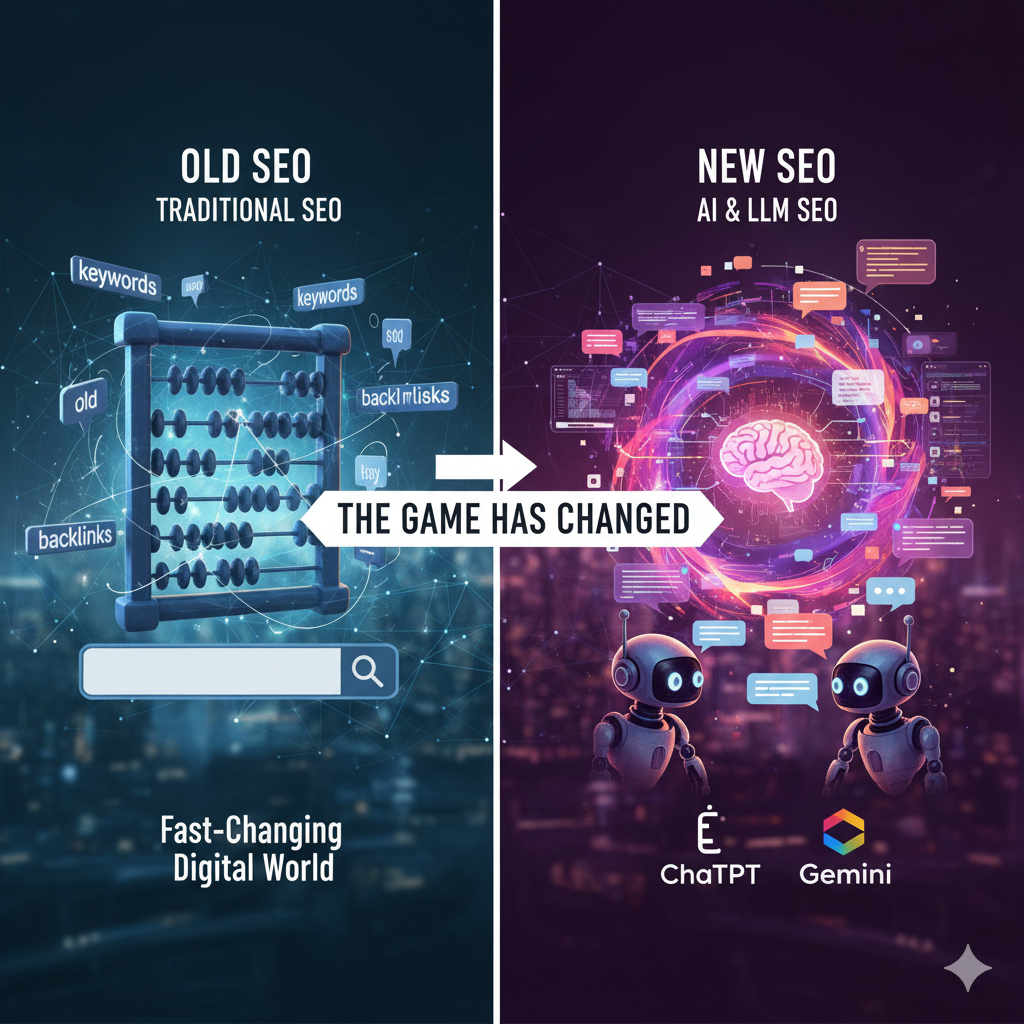
LLM SEO vs Traditional SEO
| Feature | Traditional SEO | LLM SEO |
|---|---|---|
| Focus | Keywords, backlinks, technical SEO | Intent, context, and AI readability |
| Search Model | Keyword-based ranking | Conversational, intent-based ranking |
| Content Style | Keyword-rich | Natural, human-like, and context-rich |
| Tools | Google Analytics, SEMrush, Ahrefs | ChatGPT, Gemini, Perplexity, AIO tools |
| Optimization Target | Search engine crawlers | AI models & generative search engines |
| Goal | SERP ranking | Visibility in AI-generated responses |
Why LLM SEO Matters
Google’s Search Generative Experience (SGE) is powered by AI — understanding queries semantically, not just by keywords.
Voice and chat-based search are growing, requiring conversational content.
AI assistants like ChatGPT or Gemini pull content summaries — if your content isn’t AI-readable, it may never appear in their responses.
LLM SEO ensures your content stays visible, understandable, and preferred by both humans and AI systems.
How to Do LLM SEO (Step-by-Step)
Step 1: Understand Search Intent with AI Tools
Use AI tools like ChatGPT or Perplexity to identify what people really mean behind their searches.
Example: Instead of just “best running shoes,” users may want “running shoes for flat feet or marathon training.”
Step 2: Generate Semantic Keywords
Ask LLMs to suggest semantic clusters — related terms that reflect context, not just exact keywords.
For example, for “digital marketing,” related semantic terms may include online visibility, content funnel, SEO automation, AI marketing.
Step 3: Create AI-Friendly Content
Write naturally and conversationally. Avoid keyword stuffing.
Your content should:
Answer questions directly
Include clear headings and summaries
Be structured with schema markup for AI understanding
Step 4: Optimize for Conversational Search
People now “ask” search engines questions.
Use Q&A sections, FAQs, and context-based paragraphs to make your content AI-ready.
Step 5: Use AI Tools for Technical SEO
Tools like SurferSEO, NeuronWriter, or Frase now integrate LLMs to suggest readability, structure, and tone improvements.
LLM SEO Checklist
| Task | Description | Status |
|---|---|---|
| Keyword Intent Mapping | Analyze search intent using AI tools | ☐ |
| Semantic Keyword List | Generate related terms and phrases | ☐ |
| AI-Friendly Content Writing | Write conversational, structured articles | ☐ |
| Use Schema Markup | Add FAQ, article, and product schema | ☐ |
| Optimize Meta Descriptions | Make them question-answer or summary-based | ☐ |
| Monitor Generative Visibility | Track if your content appears in SGE or AI summaries | ☐ |
| Update Regularly | Refresh content with latest AI search updates | ☐ |
Future of SEO with LLMs
The future of SEO will merge with AIO (Artificial Intelligence Optimization) — optimizing for AI-driven discovery.
To stay ahead:
Use AI-powered SEO tools
Keep your content educational and trustworthy
Focus on E-E-A-T (Experience, Expertise, Authoritativeness, Trustworthiness)
Optimize for AI summaries and conversational visibility